Snowman Santa's Hat Christmas Set: A Designer Review
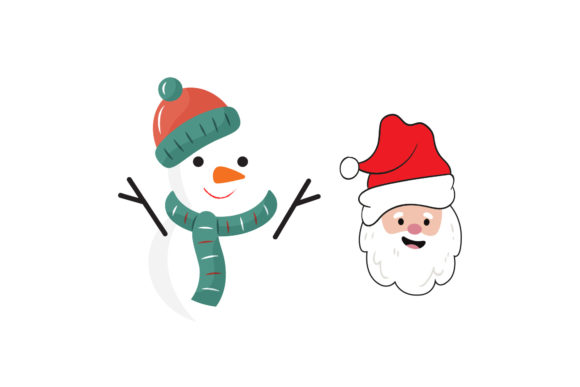
When evaluating digital assets for holiday production, I look beyond the festive charm and focus on structural integrity. As a designer who regularly prepares files for commercial embroidery and handmade product lines, my first impression of the Snowman Santa’s Hat Christmas Set is that it strikes a necessary balance between whimsy and technical viability. The illustration carries a distinct personality that feels approachable rather than generic, which is crucial for standing out in a saturated holiday market. Visually, the composition suggests a design that understands its medium; the shapes appear defined enough to translate well from screen to stitch, avoiding the muddy details that often plague complex seasonal graphics when converted into a machine embroidery design.
Translating Graphics to Stitched Reality
The true test of any embroidery file is how it performs under the needle. While this product is categorized under Illustrations and Graphics, its utility hinges on its adaptability for textile applications. In reviewing the Snowman Santa’s Hat Christmas Set, I immediately considered its potential for custom apparel. The silhouette and implied detail level suggest it would serve as an excellent centerpiece for sweatshirt embroidery or a festive tote bag design. For small business owners and Etsy sellers, this versatility is key. You aren't just buying a picture; you are acquiring a foundation for multiple revenue streams, from personalized gifts to boutique branding.
However, practical application requires foresight. If I were preparing this for a client’s holiday capsule collection, I would pay close attention to the interaction between the design elements and fabric texture. A snowman motif typically involves varying stitch types. Areas intended for the hat’s trim or the snowman’s face likely require precise satin stitch work to maintain crisp edges, while larger body sections might utilize fill stitch or even function as an applique design to reduce density. Before committing to a full production run, it is vital to verify the stitch density. Overly dense areas can cause puckering on lighter fabrics, while sparse areas may fail to cover the material adequately. Always run a test stitch-out on scrap fabric that matches your final project’s weight and weave.
Real-World Application: The Holiday Tote Bag Project
To contextualize this review, let’s consider a specific scenario: creating a line of embroidered canvas tote bags for a local craft fair. Canvas is a forgiving but textured substrate. When using the Snowman Santa’s Hat Christmas Set for this purpose, the design needs to hold its own against the coarse weave. I would evaluate whether the running stitch outlines are bold enough to remain visible. Thin, delicate lines often get lost in canvas texture, making the finished product look unfinished.
In this real-life case, I would also assess the color contrast. A white snowman on natural canvas requires strategic thread choices to ensure definition without relying solely on heavy black outlines, which can make a design feel harsh. This is where the editability of the set becomes valuable. Being able to adjust thread colors or simplify elements allows you to tailor the design to specific garment colors or customer preferences. For a handmade product aimed at gift-givers, this level of customization transforms a standard graphic into a premium, personalized gift. Customers trust products that show intentionality in their execution, and a well-adapted design signals professional craftsmanship.
Navigating Technical Constraints and Fabric Choices
Not every surface is suitable for every design, and honest evaluation means acknowledging limitations. When working with the Snowman Santa’s Hat Christmas Set, caution is advised on highly stretchy fabrics like ribbed knits or lightweight jersey unless proper stabilizer is used. The structure of a snowman figure relies on geometric stability; if the fabric shifts during stitching due to inadequate stabilization, the hat may sit crookedly or the facial features may misalign. Similarly, curved surfaces like caps present unique challenges. Ensure the design fits within the safe embroidery area of your cap frame and that the digitizing accounts for the curve to prevent distortion.
Dark fabrics also demand scrutiny. If the original artwork relies on subtle shading or light-on-light contrast, it may vanish on navy or forest green garments. In such cases, you may need to add an underlay or modify the color palette entirely. This is particularly relevant for baby embroidery or nursery decor, where pastel backgrounds are common. Always compare light and dark fabric backgrounds in printable mockup form before stitching. This step saves time and materials, ensuring the visual appeal remains high regardless of the base color. Additionally, consider washability. Items like kitchen towels or baby clothes undergo frequent laundering. Verify that the stitch type and density can withstand abrasion and heat without fraying or distorting over time.
Commercial Viability and Professional Presentation
For creative entrepreneurs and digital product sellers, the value of this set extends beyond physical stitching. The inclusion of AI, EPS, SVG, DXF, JPG, and PNG formats at a 1920 px x 1280 px canvas size offers significant flexibility. High-resolution raster files (JPG/PNG) are essential for creating professional listing photos and social media content, while vector formats (AI/EPS/SVG) allow for scalable resizing without quality loss. This is critical for maintaining brand consistency across different mediums, from website banners to packaging inserts.
However, a word of caution regarding commercial embroidery and digital sales: always confirm licensing terms before selling finished items or redistributing modified files. While the description guarantees the design is easy to use and editable, intellectual property rights vary. Protecting your craft business starts with understanding what you can legally monetize. Furthermore, when presenting this design to clients or customers, transparency builds trust. If you have modified the original embroidery file to suit a specific hoop size or fabric type, communicate that value. It demonstrates expertise and justifies a higher price point for your finished product.
Essential Pre-Stitch Checklist for Makers
Before loading the Snowman Santa’s Hat Christmas Set into your machine or listing it in your shop, run through this practical checklist to ensure success:
- Verify Hoop Compatibility: Confirm the design dimensions fit your specific machine’s hoop size. Resizing can alter stitch density and registration, so check these parameters after any scaling.
- Test Thread Contrast: Stitch a sample on both light and dark scraps. Ensure all elements, especially small details like buttons or facial expressions, remain legible.
- Inspect Stabilizer Pairing: Match your stabilizer to the fabric weight. Use cut-away for stretchy knits and tear-away for stable wovens to prevent shifting.
- Review Small Details: Zoom in on the digital file to check for tiny text or intricate corners that may not stitch cleanly. Simplify if necessary to avoid thread breaks or bird-nesting.
- Create Black and White Mockups: Test the design’s readability without color reliance. A strong design should hold up in monochrome, which is useful for single-color embroidery projects.
- Confirm Licensing: Double-check permissions for commercial use, especially if selling digital embroidery files or mass-producing apparel.
- Evaluate Wash Durability: For functional items like aprons or tea towels, perform a wash test on your sample to ensure long-term quality.
Ultimately, the Snowman Santa’s Hat Christmas Set represents a solid asset for holiday production, provided it is approached with technical mindfulness. Its strength lies in its adaptability and the professional foundation it offers for both personal crafting and commercial ventures. By treating this graphic not just as art but as a functional component of your embroidery workflow, you elevate the quality of your output. Whether you are stitching a one-of-a-kind holiday gift or fulfilling orders for your Etsy shop, the difference between a good product and a great one is found in these deliberate, practical decisions. Take the time to test, adjust, and validate, and this design will serve as a reliable staple in your seasonal collection.